

Introduction: Innovation at Any Cost?
The United States is sprinting into an AI-heavy future. The Trump administration’s emerging approach to AI—framed as a bid to “win the AI race”—leans into rapid buildout: more chips, more data centers, more energy, and fewer regulatory “barriers.” Supporters say it’s the bold pivot the U.S. needs to seize technological leadership, reduce supply-chain dependence, and capture the economic dividends of the AI boom. Critics counter that the plan erodes safeguards just when AI’s societal risks are scaling fastest.
This article unpacks what the administration is proposing, why some in tech and policy circles cheer the acceleration, and why others warn that an unchecked push could reshape labor markets, the environment, surveillance norms, geopolitics, and even capital markets in ways we’ll struggle to reverse.
What the New Strategy Actually Says
A “Build, Baby, Build” Doctrine
The White House’s America’s AI Action Plan lays out three big pillars: accelerate AI innovation, deploy AI across government and national security, and build the physical backbone—chips, fabs, and data centers—fast. The plan explicitly celebrates deregulation, rescinds prior guardrails viewed as “onerous,” and calls for removing red tape at both federal and state levels. It also sketches specific permitting reforms (e.g., expanded categorical exclusions under NEPA, broader use of FAST-41) to speed data center and energy projects. The White House
From “Guardrails” to “Go-Fast”
One early signal was an order titled “Removing Barriers to American Leadership in Artificial Intelligence,” revoking prior directives that the administration argues held back innovation. The message is clear: the federal stance is to privilege speed and investment over preemptive constraint, especially for private-sector R&D. The White House
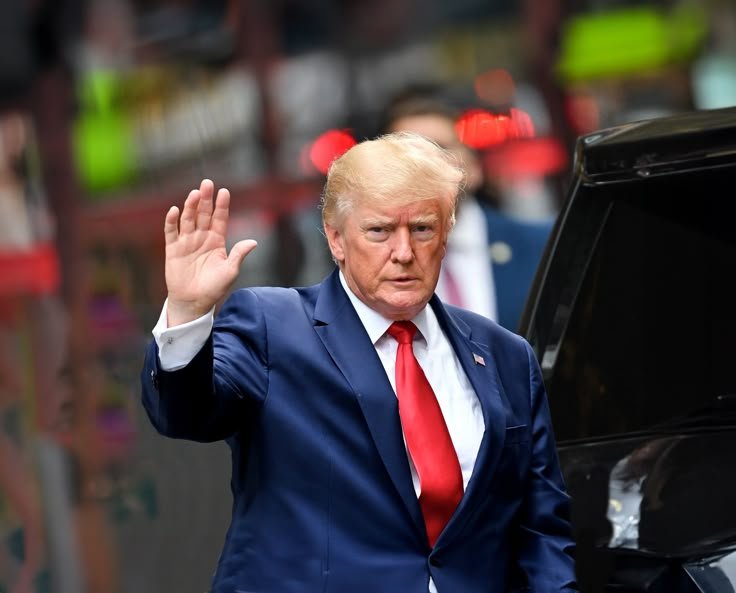
Culture-War Framing in Federal AI
Another notable element is the July executive action on “Preventing Woke AI in the Federal Government,” which positions “ideologically neutral” AI as a policy aim for procurement and use in agencies. Supporters say it prevents political bias in automated systems; critics say it injects politics directly into technical standards. The White House
Workforce, National Security, and Infrastructure
The plan highlights retraining and apprenticeships for AI-era jobs (from electricians for data centers to AI-literate roles), and prioritizes high-security AI facilities for defense and intelligence workloads. It also emphasizes export competitiveness and supply-chain security for semiconductors and advanced compute. The White House
Where Acceleration Meets Industry Policy: Intel, Stakes, and State Support
The administration is exploring a more interventionist industrial policy—converting CHIPS Act grants into a U.S. equity stake (around 10%) in Intel. Backers say it ensures taxpayer return, strategic control, and resilience amid chip rivalry with China; skeptics warn about politicizing capital allocation and moral hazard. Reporting and official comments indicate the stake concept is being actively considered. ReutersPBSYahoo FinanceThe Times of India
The debate arrives alongside fresh private capital flows into U.S. chipmaking and AI infrastructure. In parallel to the stake discussion, there are reports of large investments and partnerships meant to accelerate domestic AI hardware supply—again showing how the AI push is tightly coupled to a broader industrial agenda. The Wall Street Journal
Why Many in Tech Applaud the Strategy
1) Time-to-Market Is Everything
AI advantage compounds: better models attract more users, which yields more data, which improves the models, and so on. For industry, permitting speed and regulatory certainty are competitive weapons; every month counts when rivals in China or the EU are also racing.
2) Infrastructure Is the Bottleneck
Compute, power, and cooling now throttle AI capability. Policies that streamline siting and permitting for data centers—and accelerate grid and generation upgrades—could unlock major capacity. The plan’s detailed moves on categorical exclusions and FAST-41 expansion are laser-focused on this chokepoint. The White House
3) National Security Imperatives
Defense and intelligence uses of AI are maturing (from ISR to cyber to logistics). The plan’s call for high-security AI data centers and a more coordinated adoption posture resonates with national security stakeholders who view compute as critical infrastructure. The White House
4) Talent and Middle-Class Jobs
A less-discussed but popular plank is trades and middle-skill jobs tied to the buildout—electricians, advanced HVAC, construction, and operations—plus tax and training tweaks to help employers reimburse AI upskilling. That’s politically resonant while addressing real labor shortages in power- and compute-heavy projects. The White House
The Critics’ Core Concerns
1) Deregulation ≠ Safety
AI systems already influence hiring, credit, insurance, healthcare triage, and criminal justice. Stripping or delaying guardrails right as usage explodes, critics say, invites systemic harms—bias, discrimination, opaque decisions with no recourse—especially for marginalized communities. Commentators argue the new posture replaces a risk-managed ramp with a market-first gamble. Brookings
2) Politicizing Technical Standards
Positioning procurement around “anti-woke” framing risks turning technical governance into a partisan battleground. Agencies could face pressure to prefer or reject vendors based on ideological theater rather than verifiable safety, transparency, or performance metrics. Analysts warn this dynamic may chill open debate about fairness, privacy, and civil rights. The White HouseBrookings
3) Environmental Externalities of “Build, Baby, Build”
Data centers are hungry—for land, water, and power. Local air and water impacts, grid congestion, and community costs can spike when siting accelerates. Opinion writers and researchers point to studies estimating large public-health and environmental costs if buildout surges without robust review. The plan’s proposals to expand categorical exclusions and streamline Clean Air and Clean Water Act requirements are lightning rods. The White HouseSan Francisco Chronicle
4) Surveillance and Corporate Power
Expanding AI with thin oversight can supercharge surveillance—both by government and large platforms—through pervasive biometrics, behavior tracking, and predictive analytics. Some commentators warn that letting vendors “self-regulate” entrenches power asymmetries and reduces democratic accountability. San Francisco Chronicle
5) Industrial Policy: Picking Winners, Socializing Risk
Turning grants into equity stakes may align taxpayer upside, but it can also blur the line between referee and player. If government ownership steers capital flows or shields an incumbent during downturns, it risks crowding out competitors and dampening innovation. Skeptics invoke moral hazard: privatize profits, socialize losses. PBSYahoo Finance
The Permitting Flashpoint: Speed vs. Scrutiny
The plan’s most concrete operational lever is permitting. Categorical exclusions under NEPA can be efficient for low-impact projects; expanding them for massive AI campuses is controversial. Critics fear that pre-clearances for large-scale builds bypass community input and cumulative-impact analysis, especially around water stress and emissions from associated generation. Proponents reply that the status quo is too slow for a strategic technology transition, and that federal consistency will prevent a patchwork of local bottlenecks. The White House
What’s at stake locally:
- Water: Some data centers require substantial water for cooling; in drought-prone regions that’s politically and ecologically sensitive.
- Power: Rapid load growth means new substations, lines, and—often—fossil peakers unless clean capacity catches up.
- Air Quality: If fossil generation expands to meet peak AI load, surrounding communities shoulder pollution externalities.
- Land Use & Housing: Large campuses can shift land markets, logistics traffic, and service-worker housing dynamics.
These are manageable with planning—heat reuse, non-potable water, dry cooling, clean PPAs, battery storage—but they require standards and time to implement. Critics worry the plan’s “fast lane” works against that preparation. San Francisco Chronicle
Governance by Procurement (and Its Limits)
One way governments influence AI without heavy-handed rulemaking is through procurement standards (what they buy, from whom, with which transparency and safety requirements). The administration’s approach emphasizes “ideological neutrality” and speed. But many researchers argue that effective procurement should also require:
- model documentation and interpretability thresholds,
- auditability and incident reporting,
- privacy-by-design and data-minimization,
- rigorous testing against bias and security risks, and
- clear redress mechanisms for affected people.
These are not just checklists; they are operational controls that prevent downstream harm. The question is whether the current strategy will adopt them as minimums—or sideline them as “barriers.” Brookings
National Security: Real Risks, Real Trade-offs
The plan rightly points out that frontier AI has national-security implications—and that adversaries are moving quickly. It proposes joint DOD–IC assessments, high-security AI data centers, and talent pipelines. Security specialists, though, caution that speed without resilience is brittle. Concentrated compute, lightly regulated model access, and insufficient supply-chain attestation can create single points of failure. Building hardened facilities and standards is prudent; removing too many environmental or oversight checks could expose different classes of risk. The White House
Markets and the AI Boom: Bubble Chatter, Policy Signals
Markets are hypersensitive to policy signals. When Washington signals “green lights” for AI buildout—permitting, subsidies, or even equity stakes—capital rotates quickly. That can turbo-charge real capacity and jobs, but it can also inflate valuation cycles. If policy later whiplashes (e.g., local moratoria, grid constraints, or adverse court rulings), investors can be left holding the bag. The broader debate over whether we’re witnessing an “AI bubble” intersects with these policy choices—and with headline moves around chipmakers and mega-models. (Recent reporting on government–Intel arrangements and market jitters shows how tightly policy and pricing are coupled.) PBSYahoo Finance
The Deepfake Dilemma: Moving Fast on the Visible Harm
One risk the plan acknowledges is deepfakes—non-consensual and otherwise malicious synthetic media. The text references actions to combat sexually explicit deepfakes and calls for further steps. That’s an area of relatively broad consensus: victims need swift takedowns, evidentiary standards, and cross-platform coordination; platforms need clear legal incentives to detect, label, and limit virality; and law enforcement needs tools that don’t trample civil liberties. The open question is whether broader content-safety investments and recourse mechanisms will advance in parallel—or be sidelined in the sprint for scale. The White House
A Practical Middle Path: Speed with Guardrails
If the U.S. wants speed and safety, several pragmatic measures can align with the plan’s growth targets while addressing critics’ concerns:
- Targeted, Risk-Tiered Governance
Adopt a risk-tier system (use-case + capability + deployment context) so paperwork aligns with potential harms. High-risk domains (credit, employment, healthcare, critical infrastructure) get stricter testing, documentation, and audit requirements; low-risk innovation sandboxes stay nimble. The plan’s nod to “regulatory sandboxes” could slot into this if sandboxes require transparency and publish results. The White House - Procurement With Teeth
Bake safety, privacy, and fairness thresholds into federal buying—without ideological tests. Require model cards, evaluation artifacts, robustness and bias benchmarks, and incident response plans. This lever scales influence across vendors without writing blanket, innovation-chilling rules. - Fast-Track With Conditions
If data center projects use accelerated permitting, condition the fast lane on:
- verifiable clean-energy PPAs or storage offsets,
- water-stress mitigation (non-potable, dry or hybrid cooling),
- waste-heat reuse where feasible, and
- community benefits (infrastructure improvements, workforce programs).
This preserves speed while internalizing externalities currently borne by neighbors. (Critics’ cost projections emphasize why conditions matter.) San Francisco Chronicle
- Compute & Model Access Controls
For frontier models and sensitive compute: mandate security baselines, provenance, export controls enforcement, and red-team reporting. This aligns with national security aims while avoiding “open-door” risks. - Workforce & Safety Funds, Not Just Steel and Silicon
Fund evaluators, auditors, and red-teamers alongside fab incentives—because safety capacity is as vital as wafer capacity. The plan’s workforce components can extend beyond trades to include safety science and AI governance talent. The White House - Data Minimization and Privacy Guarantees
Tie federal adoption to rigorous data-governance controls—minimization, encryption, strong access controls, and de-identification standards—so the growth of applied AI doesn’t become growth of indiscriminate surveillance.
What This Means for Companies
- Builders: Expect shorter timelines if your project aligns with national priorities (chips, secure data centers, power). But anticipate more scrutiny from civil society on siting, water, and emissions—and plan mitigations early.
- Model Labs: Procurement wins will hinge on showing robust evaluation, traceability, and incident handling, even if rules aren’t formalized.
- Enterprises: Acceleration raises both opportunity and liability. Adopt internal risk-tiering and governance now; regulators and counterparties will expect it.
- Startups: Sandboxes and lighter-touch regimes can help, but customers (especially public sector) will increasingly ask for proof of safety and compliance.
- Investors: Policy tailwinds can lift multiples; stay sober about infrastructure bottlenecks (power, transformers, substations) and the possibility of local pushback or court challenges on expedited permits.
What This Means for Communities and Workers
- Communities near AI campuses should engage early on water, power, and traffic plans—and negotiate for benefits: grid upgrades, broadband, training centers, and local hiring commitments.
- Workers across trades can ride a real boom: electricians, cooling techs, controls engineers, safety auditors. Knowledge workers should pursue AI literacy, governance, and domain-specific augmented roles. The plan highlights employer tax advantages for AI training—workers can ask HR about programs tied to those provisions. The White House
The Politics Beneath the Policy
AI policy is no longer a technocratic niche; it’s a frontline of cultural and economic politics. Orders that frame “woke AI” as a threat, and responses that frame deregulation as corporate capture, both risk polarizing what should be a pragmatic negotiation over thresholds, audits, and civil rights. That polarization can produce whiplash: companies optimize for one regime only to meet a new set of demands after the next election. Analysts warn that stability—a predictable, bipartisan floor of safety expectations—may be more valuable than maximal deregulatory swings or maximal preemptive restrictions. The White HouseBrookings
Bottom Line: The Case for Urgent Balance
The U.S. does need to move fast on AI. Compute constraints are real; adversaries are not waiting; returns to scale accrue to early movers. The Trump administration’s strategy correctly recognizes those dynamics and offers concrete levers—permitting, procurement, industrial policy—to accelerate.
But “unchecked” acceleration isn’t a neutral default. It chooses who bears costs and when we discover failure modes. Stronger, clearer baselines for safety, privacy, equity, and environmental stewardship aren’t roadblocks; they’re the scaffolding that lets speed scale without collapse. The most competitive AI ecosystem is not the one that ignores guardrails—it’s the one that bakes them in so builders can move quickly with public trust.
A durable AI policy will:
- keep the fast lanes,
- price in externalities and mitigate them,
- insist on measurement and transparency, and
- de-politicize safety fundamentals.
That path is harder than slogans—but it’s how you win and keep what you win.
Sources & Further Reading
- America’s AI Action Plan (White House policy PDF; permitting, workforce, national security, deepfakes, and deregulation emphasis). The White House
- Executive action: “Removing Barriers to American Leadership in AI” (January 2025). The White House
- Executive action: “Preventing Woke AI in the Federal Government” (July 2025). The White House
- Analysis/commentary on politicization of AI guardrails. Brookings
- Debate on converting CHIPS Act support to an Intel equity stake. ReutersPBSYahoo FinanceThe Times of India
- Commentary on environmental and community costs of accelerated data-center buildout. San Francisco Chronicle
- Opinion arguing the deregulatory thrust risks surveillance, inequality, and ecological harms. San Francisco Chronicle
The USA Tech Layoff Wave: Causes, Impacts, and the Future of Work
Corporate Highlights in Today’s Market
[…] Unchecked AI Expansion? Critics Warn Attention on Trump’s New Strategy […]